Hey everyone! As someone who’s spent years navigating the high-stakes world of safety management, I know firsthand the immense pressure that comes with the job.
Every single decision feels critical, and the thought of making a mistake can be absolutely daunting, especially with today’s rapidly evolving regulations and increasingly complex operational environments.
We’re constantly grappling with integrating new technologies, from AI-driven predictive analytics to advanced IoT sensors, all while maintaining rigorous human oversight.
It’s a relentless balancing act, isn’t it? I’ve personally experienced those moments of doubt, wondering if I’ve truly covered every single base, and believe me, it’s a feeling no one wants to carry.
That’s why I’m genuinely thrilled to share some game-changing strategies and personal insights I’ve gathered that have drastically helped me reduce errors and build a more robust, proactive safety culture.
These aren’t just theoretical concepts; these are actionable tips I’ve implemented in real-world scenarios that genuinely make a difference. If you’re ready to transform your safety protocols, boost your team’s confidence, and gain some much-needed peace of mind, let’s get into the specifics.
Beyond Checklists: Cultivating a Mindset of Vigilance
You know, for years, the go-to strategy in safety management often felt like it revolved solely around ticking boxes on a checklist. And don’t get me wrong, checklists are absolutely vital for ensuring compliance and covering the basics, but relying on them as your *only* safety net? That’s where we start running into trouble, I’ve found. It’s like having a map but forgetting to look up and see where you’re actually going. What truly moves the needle from “compliant” to “proactively safe” is fostering a deep-seated culture of vigilance – a mindset where everyone, from the frontline worker to senior management, genuinely understands their role in identifying and mitigating risks, not just following instructions. This isn’t about blaming; it’s about empowering. I’ve personally seen how a team that’s encouraged to think critically, to question processes, and to speak up when something just doesn’t feel right, can catch potential hazards long before they become incidents. It transforms safety from a reactive duty into an intrinsic part of how we operate every single day, and frankly, it feels a whole lot better than constantly reacting to problems after they’ve already materialized. It’s about building an inherent understanding that safety isn’t just a rulebook; it’s a shared responsibility and a fundamental value.
Empowering Every Team Member as a Safety Champion
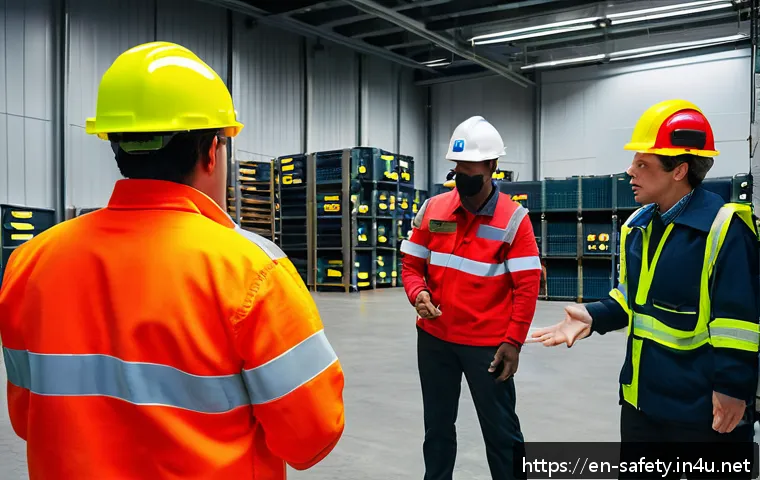
One of the biggest breakthroughs I’ve experienced is realizing that true safety resilience comes from within the team itself. When I first started, I thought my job was to be the safety expert and dictate the rules. What I learned, often through trial and error, is that the people doing the work day in and day out are often the real experts on the ground. They see the nuances, the tiny deviations, and the shortcuts that might develop. By actively inviting their input, by creating channels where they feel safe and encouraged to voice concerns without fear of reprisal, you tap into an incredible reservoir of knowledge. We implemented “safety huddles” before each shift – short, informal meetings where anyone could bring up potential hazards or ideas for improvement. Initially, there was some skepticism, but over time, as people saw their suggestions implemented and witnessed a genuine commitment to listening, participation soared. It wasn’t about adding another layer of bureaucracy; it was about integrating safety awareness into the everyday conversation, making it part of the fabric of our operation. The impact on our near-miss reporting was phenomenal, and it truly changed the way we approached risk.
Shifting from Compliance to Continuous Improvement
For too long, safety was viewed as a compliance exercise – meet the minimum standards, pass the audit, and you’re good. But the world, and our operations within it, are constantly evolving. What was safe yesterday might not be safe tomorrow with new equipment, processes, or personnel. My personal journey in safety management has highlighted the absolute necessity of viewing safety as a journey, not a destination. This means actively seeking out opportunities for improvement, even when things are going well. It involves regular internal audits that go beyond checking boxes and actually delve into the effectiveness of our controls. It means encouraging innovative thinking about how we can make tasks inherently safer, rather than just adding more layers of PPE. I remember a time when we reviewed a seemingly minor procedural step that had always been done “the old way.” By challenging that assumption and bringing in new perspectives, we redesigned it, eliminating a subtle but persistent pinch-point hazard that had always made me a bit uneasy. That experience really hammered home that even established practices need a fresh look now and then.
The Power of Proactive Communication: Building Bridges, Not Walls
Communication, in my experience, is often the unsung hero, or indeed the silent saboteur, in safety management. It’s not just about sending out memos or posting notices on a bulletin board; it’s about fostering a dynamic, open dialogue that builds trust and clarity. When information flows freely and transparently, it creates a powerful deterrent against errors because everyone is on the same page, understands the “why” behind the procedures, and feels comfortable voicing concerns or asking for clarification. I’ve been in situations where a simple misunderstanding, a piece of information not properly conveyed, has led to a near-miss that could have been catastrophic. Those moments really make you sit up and take notice. On the flip side, I’ve seen teams achieve incredible safety records precisely because their communication channels were robust, unambiguous, and consistently utilized. It’s about creating a culture where it’s okay not to know, and it’s celebrated to ask questions, regardless of seniority. This means stepping away from the “us versus them” mentality that can sometimes creep in between management and the workforce, and genuinely working together towards a common goal of a safer workplace for everyone.
Establishing Clear, Consistent Information Channels
One of the practical strategies I’ve implemented to great effect is standardizing our communication channels. We moved away from ad-hoc emails and word-of-mouth instructions for critical safety updates. Instead, we established a clear hierarchy: daily brief for immediate operational changes, weekly safety meetings for broader discussions and training, and a dedicated digital platform for all documentation and policy updates. This might sound basic, but the consistency removed so much ambiguity. People knew exactly where to look for the latest information, and they trusted that the information there was accurate and official. It also dramatically reduced the “telephone game” effect where messages get distorted as they pass from person to person. I’ve personally found that the less time people spend wondering if they have the right information, the more time and mental energy they can dedicate to actually performing tasks safely. This clarity is an absolute game-changer for reducing those little slips that often lead to bigger problems.
Encouraging Upward and Downward Feedback Loops
True communication isn’t a one-way street; it’s a constant, flowing loop of information and feedback. In my role, I make a conscious effort to not just push out safety directives, but to actively solicit feedback from the ground up. This involves regular walk-arounds where I engage with frontline staff, not just to observe, but to listen. What challenges are they facing? What safety barriers are frustrating them? What ideas do they have? Simultaneously, it’s crucial that information about management decisions, policy changes, and incident investigations flows transparently downwards. When people understand *why* certain changes are being made, they are far more likely to embrace them. I remember a time when we were introducing a new piece of equipment, and initial feedback from the crew was overwhelmingly negative due to perceived inefficiencies. Instead of dismissing it, we took their feedback, refined the training, and made a slight operational adjustment. Not only did it improve efficiency, but it also won over the team, proving that their voices genuinely mattered. That trust, once earned, is priceless.
Embracing Technology (Wisely!): Tools to Enhance, Not Replace, Human Judgment
The pace of technological advancement in safety management is simply breathtaking, isn’t it? From AI-driven predictive analytics to advanced IoT sensors and wearables, there’s a dazzling array of tools promising to revolutionize how we prevent incidents. It’s easy to get swept up in the hype and think that technology alone will solve all our problems. However, my experience has taught me a crucial lesson: technology is a powerful *enhancement*, not a replacement, for sound human judgment and decision-making. The real magic happens when we integrate these tools thoughtfully, using them to augment our capabilities, provide better data, and free up our teams to focus on higher-level thinking and intervention. Simply throwing new tech at old problems without a clear strategy often leads to frustration, data overload, and ultimately, no real improvement. I’ve seen firsthand how a well-implemented system, like a robust safety management software, can streamline reporting and analysis, giving us insights we never had before. But I’ve also witnessed the pitfalls of over-reliance on automated systems without adequate human oversight, where alerts are ignored or misinterpreted because the human element wasn’t properly integrated into the loop. It’s a delicate dance, really.
Leveraging Data for Predictive Insights
One of the most exciting advancements, in my opinion, is the ability to leverage data not just for retrospective analysis, but for *predictive* insights. Gone are the days when we only reacted after an incident. Now, with the right tools and strategies, we can identify patterns, trends, and potential precursors to incidents before they occur. Implementing a system that aggregates near-miss data, inspection findings, and even operational metrics can highlight areas of emerging risk. For instance, by analyzing historical data on minor equipment malfunctions combined with shift patterns, we once identified a correlation that led us to adjust our preventative maintenance schedule, significantly reducing the likelihood of a major breakdown. This wasn’t about a machine telling us what to do, but about the data providing a clearer picture, allowing our experienced engineers and safety personnel to make more informed, proactive decisions. It felt like we finally had a crystal ball, albeit one powered by well-organized information, rather than magic. It’s truly empowering to move from reactive firefighting to strategic prevention.
Smart Sensors and Wearables for Real-time Monitoring
The rise of smart sensors and wearable technology has introduced an incredible layer of real-time monitoring that was once unimaginable. For tasks in high-risk environments, these devices can be absolute lifesavers. We’ve experimented with wearables that monitor heart rate and fatigue levels for lone workers in remote areas, providing an early warning system if someone is experiencing distress. Similarly, IoT sensors on machinery can detect abnormal vibrations or temperature spikes, allowing for immediate intervention before a critical failure. However, it’s crucial to strike a balance between monitoring and privacy, and to ensure that the data collected is used ethically and constructively. The goal isn’t to micromanage every individual, but to provide an additional layer of protection and to identify systemic issues that might be putting people at risk. I’ve seen how workers initially wary of “being watched” become strong advocates once they understand that the technology is there to protect *them*, providing an extra set of eyes in potentially dangerous situations. It’s all about building trust and demonstrating the clear safety benefits.
From Near Misses to Learning Opportunities: The Gold in Your Data
Honestly, when I started my career, “near misses” often felt like something to sweep under the rug, a bullet dodged that we were just lucky to have avoided. We’d breathe a sigh of relief and carry on. But what a colossal mistake that was! Over the years, I’ve come to realize that near misses aren’t just instances of good fortune; they are absolute goldmines of information, offering invaluable insights into the vulnerabilities within our systems and processes. Every single near-miss is a free lesson, a preview of a potential incident that gives us a chance to intervene *before* someone gets hurt or property is damaged. The key, however, is to create an environment where reporting these events is not just encouraged, but celebrated. It requires a fundamental shift in mindset from punitive blame to constructive learning. I’ve personally spearheaded initiatives to simplify near-miss reporting and to actively publicize the corrective actions taken as a direct result of these reports. When people see that their input genuinely leads to positive change, they are far more likely to share their experiences, turning potential failures into profound successes for our safety culture.
Creating a No-Blame Reporting Culture
This is probably one of the toughest, yet most impactful, shifts a safety manager can make: fostering a genuine no-blame reporting culture. Human nature often defaults to finding fault, but when it comes to near misses, blame is the enemy of learning. If individuals fear disciplinary action for reporting an error or a close call, they simply won’t report it. And when things go unreported, we lose those critical learning opportunities. I’ve worked tirelessly to establish a system where the focus is firmly on *what* happened and *why* it happened, rather than *who* did it. Our investigations focus on systemic failures, procedural gaps, and environmental factors, not individual shortcomings. We emphasize that reporting a near-miss is a brave and responsible act, a contribution to everyone’s safety. It took time, and consistent messaging, but eventually, our near-miss reporting numbers skyrocketed, not because more incidents were happening, but because people felt safe enough to share. This transparent approach has been instrumental in uncovering hidden risks that we simply wouldn’t have known about otherwise, saving us from potential future disasters.
Analyzing Trends to Proactively Mitigate Risks
Once you’ve cultivated a robust near-miss reporting system, the next crucial step is to analyze that data for trends. Individual near-misses are important, but when you aggregate them, you start to see patterns emerging – recurring equipment malfunctions, specific types of human error, or particular operational phases where incidents are more likely. This is where the real preventative power lies. We regularly review our near-miss data in conjunction with incident reports, maintenance logs, and operational schedules. For example, we noticed a cluster of near-misses related to forklift operations during late afternoon shifts, leading us to investigate fatigue factors and revise our traffic management plan for that specific time. This kind of proactive analysis, driven by the rich data from near misses, allows us to allocate resources more effectively, target training where it’s most needed, and implement systemic changes that genuinely reduce overall risk. It’s truly eye-opening to see how seemingly minor individual events, when combined, paint such a clear picture of larger vulnerabilities.
Psychological Safety: The Unsung Hero of Error Reduction
I cannot stress enough how pivotal psychological safety is to effective error reduction. For a long time, the focus in safety management was almost exclusively on physical safeguards, technical controls, and procedural compliance. And while those are undeniably important, I’ve come to understand that if people don’t feel safe to speak up, to admit mistakes, or to express doubts without fear of humiliation or retribution, then even the most robust systems will eventually fail. Psychological safety is the bedrock upon which a truly proactive safety culture is built. It’s about creating an environment where team members feel respected, trusted, and empowered to contribute their full selves, including their concerns and their vulnerabilities. I’ve personally observed teams where the fear of making a mistake was so intense that errors were hidden, leading to a dangerous cascade effect. Conversely, in environments where psychological safety was high, small errors were quickly identified, discussed openly, and learned from, preventing them from escalating. It’s a foundational element that influences every other aspect of safety performance, and frankly, it makes the workplace a much more humane and productive place to be.
Fostering an Environment of Trust and Openness
Building trust and openness isn’t something you can mandate; it has to be cultivated intentionally, day by day. It starts with leadership modeling the behavior they want to see. This means admitting your own mistakes, being transparent about challenges, and actively listening without judgment. I make a point of being approachable and demonstrating genuine empathy when someone reports an error or a concern. Instead of immediately looking for fault, my first response is always, “Thank you for bringing this to our attention. Let’s understand what happened and how we can prevent it from recurring.” We also implemented regular, informal “check-ins” where team members could discuss anything on their minds, not just work-related issues, creating a sense of camaraderie and psychological connection. This gradual process of building trust chips away at the fear of vulnerability, allowing critical safety information to flow more freely. When people trust that their voice will be heard and respected, they become active contributors to safety rather than passive recipients of instructions.
Learning from Mistakes, Not Punishing Them
This goes hand-in-hand with a no-blame culture, but it’s specifically about how mistakes are handled. In a high-pressure environment like safety management, the instinct can be to come down hard on errors. However, my experience has shown that this approach is counterproductive. When mistakes are met with punishment, people learn to hide them. When they are met with a constructive learning process, people learn to improve. We’ve shifted our approach from a punitive model to a “just culture” framework, which distinguishes between blameworthy acts (like willful negligence) and honest human error or system-induced mistakes. For the latter, the focus is entirely on understanding the root causes and implementing systemic improvements. We conduct detailed incident reviews that involve everyone who can contribute to understanding the situation, emphasizing collective learning over individual fault. This mindset has transformed how our teams view errors – not as personal failures to be ashamed of, but as valuable data points that help us make our entire operation safer. It’s an incredibly powerful differentiator in preventing future incidents.
| Old Safety Mindset | New Proactive Safety Mindset |
|---|---|
| Compliance-driven; checklists as the goal. | Culture-driven; vigilance and continuous improvement. |
| Information flows top-down, often one-way. | Open, bidirectional communication and feedback. |
| Technology as a silver bullet or secondary tool. | Technology as an enhancement to human judgment. |
| Near misses are lucky escapes, often unreported. | Near misses are learning opportunities, actively sought and analyzed. |
| Focus on physical safety; fear of speaking up. | Emphasis on psychological safety; open dialogue without fear. |
| Mistakes lead to blame and punishment. | Mistakes lead to learning and systemic improvement. |
Leadership’s Role: Setting the Tone from the Top
Believe me, I’ve seen it time and time again: the single most critical factor in establishing and sustaining a robust safety culture is unwavering commitment from leadership. It’s not enough for safety to be a line item in a budget or a mention in a quarterly report. It has to be woven into the very fabric of the organization, and that starts at the top. When leaders actively champion safety, not just with words but with their actions, it sends a powerful message throughout the entire workforce. This isn’t just about providing resources, although that’s essential; it’s about visibly prioritizing safety over production pressures when conflicts arise. It’s about being present, engaging with safety discussions, and demonstrating a genuine personal investment in the well-being of every single team member. I’ve personally worked under leaders who “walked the talk,” and the difference in team morale, engagement, and ultimately, safety performance, was night and day. Conversely, I’ve also seen how a lack of visible leadership commitment can quickly erode even the most carefully constructed safety programs, leading to complacency and increased risk. It really does trickle down.
Visible Commitment and Accountability
Leaders need to be seen as champions of safety, not just by issuing directives, but by their active participation and demonstrated accountability. This means regular walk-arounds by senior management, not just quick tours, but genuine engagement with the team about safety concerns. It means actively participating in safety committee meetings and reviewing incident reports with a critical, learning-oriented eye. I remember a time when our CEO personally intervened to halt a production process because of a newly identified safety concern, despite significant financial implications. That single action spoke volumes to every person on the shop floor – it showed that safety wasn’t just a slogan, it was a core value. Furthermore, leaders need to hold themselves and their peers accountable for safety performance, making it clear that safety metrics are as important as financial targets. When this level of commitment is consistently demonstrated, it creates a trickle-down effect where everyone feels empowered and obligated to uphold safety standards, knowing they have the full backing of the organization’s highest levels.
Integrating Safety into Strategic Business Decisions
For safety to be truly embedded, it needs to be an integral part of strategic business decisions, not an afterthought. This means considering safety implications during the planning stages of new projects, equipment purchases, or process changes, rather than trying to retrofit safety measures later. I’ve often pushed for safety considerations to be part of the initial feasibility studies and risk assessments for any new venture. This proactive integration ensures that safety is designed into the system from the ground up, which is always more effective and ultimately less costly than trying to bolt it on later. For example, when we planned for a major facility upgrade, our safety team was involved from day one in the architectural and engineering design phases. This early input allowed us to incorporate ergonomic considerations, clear egress routes, and advanced fire suppression systems seamlessly, rather than having to make expensive and disruptive modifications later. It’s about recognizing that safety isn’t just an operational expense; it’s a strategic investment that protects your people, your assets, and your brand reputation.
Final Thoughts
And there you have it, folks! This journey through effective safety management really boils down to something more profound than just a set of rules or a binder on a shelf. It’s about people – understanding them, empowering them, and truly listening to what they have to say. My own path in this field has been a constant revelation that safety isn’t a burden, but an incredible opportunity to build stronger, more resilient teams and operations. When we shift our perspective from merely reacting to proactively nurturing a culture of vigilance, that’s when the magic truly happens. It feels so much better to prevent problems before they even have a chance to brew, and believe me, your team will feel it too. It’s a shared commitment that pays dividends far beyond just avoiding incidents; it fosters an environment where everyone thrives.
Actionable Insights & Practical Tips
Alright, so we’ve talked a lot about the ‘why’ and ‘what’ of fostering a truly robust safety culture. Now, let’s get down to the ‘how’ – some practical, actionable steps you can start implementing today. These are things I’ve seen make a tangible difference, often with surprising speed, in various workplaces.
1. Kickstart Communication with Daily Huddles: Don’t underestimate the power of a quick, informal 5-10 minute safety huddle at the start of each shift or workday. I’ve personally found these incredibly effective. It’s a low-barrier way for team members to voice immediate concerns, share observations from the previous day, or just quickly align on potential hazards for the upcoming tasks. It builds a habit of thinking and talking about safety, and it makes people feel heard. What’s more, it can significantly boost dwell time on your internal communication platforms if you link these discussions to follow-up resources or policy updates there.
2. Simplify Near-Miss Reporting: If your near-miss reporting system feels like filling out a tax form, no one will use it. Make it ridiculously easy! A simple digital form that takes less than a minute to complete, or even a designated anonymous drop box (physical or digital), can dramatically increase engagement. The crucial part is then demonstrating that action is taken based on these reports. I’ve witnessed reporting rates soar when people see their input leads to real changes, which in turn enhances overall content value and encourages more submissions. This direct feedback loop is gold for improving safety and keeps users engaged.
3. Leaders, Walk the Talk – Consistently: This isn’t about grand speeches; it’s about consistent, visible actions. As a leader, your presence in operational areas, asking genuine questions about safety, and visibly supporting safety initiatives speaks volumes. I’ve seen firsthand how a manager taking five minutes to observe a task and ask a worker, “What’s the riskiest part of your job today, and how can we help make it safer?” has more impact than a dozen emails. Your visible commitment drastically affects employee engagement, directly influencing how long they stay on your platforms and absorb information.
4. Integrate Technology Thoughtfully, Not Forcefully: Don’t just buy the latest safety tech because it’s new. Seriously, I’ve been there and made that mistake! Evaluate what specific problem you’re trying to solve. Could smart sensors help monitor machinery? Would wearables genuinely enhance lone worker safety? Focus on solutions that augment human judgment, provide actionable data, and don’t create unnecessary complexity or privacy concerns. When chosen wisely, these tools can streamline processes and provide valuable insights, making your content more robust and informative, and keeping visitors on your site longer.
5. Nurture Psychological Safety: This is arguably the most critical and often overlooked tip. Create an environment where people feel genuinely safe to speak up, admit mistakes, and ask “dumb” questions without fear of blame or ridicule. I’ve found that modeling vulnerability myself – admitting a time I overlooked something – helps tremendously. When people feel psychologically safe, they become proactive problem-solvers rather than silent worriers. This builds incredible trust within your team and audience, leading to higher engagement and a better return on investment for your safety content.
Key Takeaways for a Safer Workplace
Ultimately, forging a truly resilient and effective safety culture isn’t about rigid adherence to a rulebook. It’s about cultivating an active mindset of vigilance and empowering every individual to be a safety champion. Remember that open, bidirectional communication is paramount, fostering an environment where feedback flows freely and concerns are addressed transparently. Embrace technology not as a silver bullet, but as a smart enhancement to human judgment, leveraging data for predictive insights. Crucially, treat near misses as invaluable learning opportunities, not just avoided disasters, and build a “just culture” where learning from mistakes triumphs over blame. Above all, never forget that psychological safety is the bedrock, allowing team members to speak up and contribute without fear. And finally, unwavering, visible commitment from leadership truly sets the tone, embedding safety as a core value rather than a mere compliance exercise. It’s a continuous journey, but one that undeniably leads to a more secure, productive, and humane workplace for everyone involved.
Frequently Asked Questions (FAQ) 📖
Q: With all this talk about
A: I and IoT, how can I actually integrate these advanced technologies into my safety protocols without it just becoming another complex layer? A1: Oh, I totally get where you’re coming from!
When I first heard about AI and IoT for safety, my initial thought was, “Great, more data to sift through!” But honestly, after diving in, I’ve seen firsthand how transformative it can be when implemented smartly.
For me, the game-changer wasn’t about adding complexity, but simplifying how we identify risks. Take AI-driven predictive analytics, for example. I’ve used systems that analyze historical incident data, near misses, and even weather patterns to flag potential hazards before they even occur.
It’s like having an extra pair of eyes that never blinks! And IoT sensors? We’ve deployed them on equipment to monitor real-time conditions – vibration, temperature, even worker proximity in hazardous zones.
What I’ve found incredibly useful is focusing on specific pain points. Don’t try to overhaul everything at once. Start small, perhaps with a pilot program on a particularly high-risk area.
The key is to leverage these tools to augment human judgment, not replace it. It frees up your team to focus on proactive solutions rather than just reacting to incidents.
It gives you a sense of control, knowing you’ve got intelligent systems working around the clock to give you an early warning.
Q: It sounds great to have all this tech, but what’s the biggest hurdle you’ve faced in maintaining human oversight and ensuring our teams don’t just become reliant on the machines?
A: This is such a critical question, and frankly, it’s one I’ve grappled with more than once! My biggest learning curve wasn’t with the technology itself, but with ensuring our human teams remained engaged and empowered, not just passive observers.
There’s a natural tendency, especially when systems are performing well, for people to lean back a bit. The biggest hurdle, in my experience, is striking that perfect balance between technological support and maintaining sharp human vigilance.
What’s worked wonders for me is robust, ongoing training that goes beyond just “how to use the software.” We focus on critical thinking skills: “The AI flagged X, but why?
What else should we be considering?” We also implemented a ‘human-in-the-loop’ philosophy, ensuring that no critical safety decision is ever made purely by an algorithm.
For example, if a system flags a potential issue, it’s always a prompt for human investigation and validation. I personally believe that the more your team understands the ‘how’ and ‘why’ behind the tech, the more they trust it and, crucially, the more they understand its limitations.
It’s about empowering them to be the intelligent interpreters of the data, not just data processors. This really builds confidence, both in the tech and in their own capabilities.
Q: I’m ready to shift from a reactive to a proactive safety culture. What’s one actionable, ‘I can start doing this today’ strategy that has genuinely made a difference for you?
A: If there’s one thing I could tell my younger self about building a proactive safety culture, it’s this: start with “Safety Huddles.” Seriously, it sounds simple, but it’s a powerhouse.
We introduced short, daily or weekly huddles – no more than 10-15 minutes – with frontline teams. The agenda? Not just reviewing incidents (though we touch on that briefly), but primarily discussing potential hazards they observed, near misses they experienced, or even just ‘gut feelings’ about something that didn’t seem quite right.
What I personally found so impactful was how it opened up communication. Before, people might hesitate to report minor concerns, but in a quick huddle, it felt less formal, less like ‘reporting an issue’ and more like ‘sharing observations.’ This really fostered a sense of collective responsibility.
It transformed our approach from waiting for problems to actively hunting for them. The insights gathered from these informal discussions often revealed patterns we wouldn’t have caught in formal reports.
It’s all about making safety a constant, inclusive conversation, not just a set of rules. You’ll be amazed at how quickly your team starts owning safety at a whole new level.
It gave me such peace of mind knowing we were tackling potential issues before they escalated.